Our Latest Articles

Lock Your Mortgage Rate Amid Iran War Impact
Mortgage Rates, Florida Home Buying, 2026 Market
Should You Lock Your Rate Now? The Iran War Effect on U.S. Mortgage Rates
With the Iran war pushing oil prices – and inflation – higher, Florida homebuyers are facing a fast‑moving mortgage market. Understanding whether to lock your rate now could save you thousands over the life of your loan.
How the Iran War Is Shaping Mortgage Rates in 2026
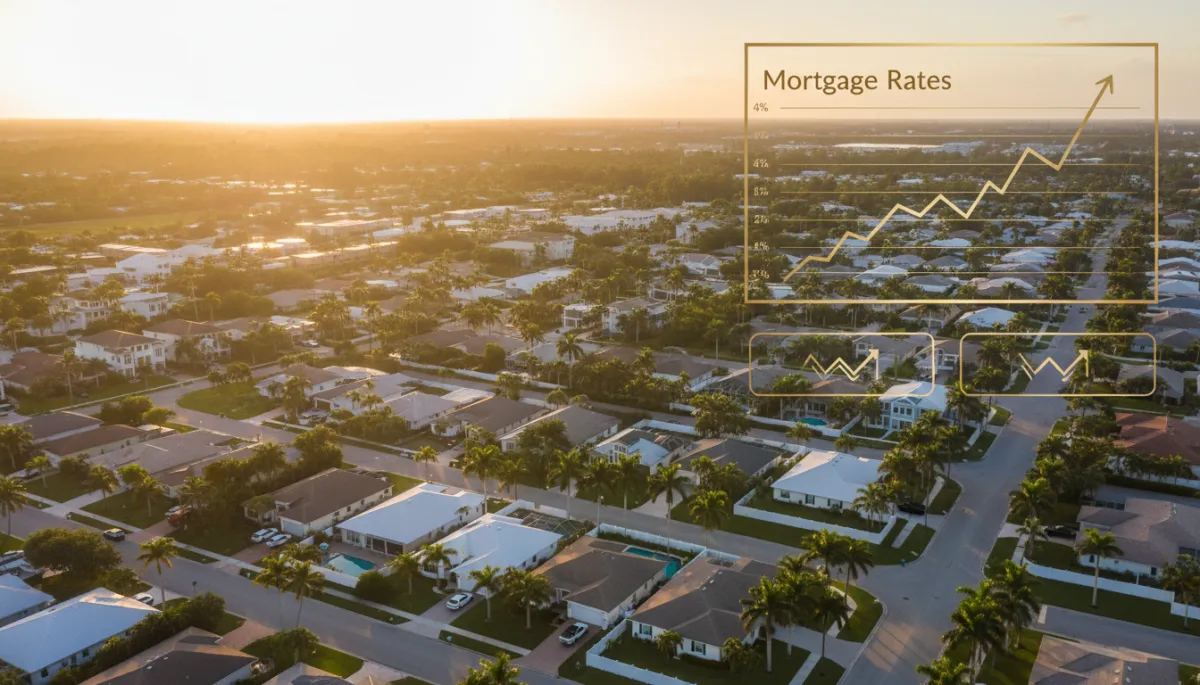
Since the Iran war escalated in late February 2026, U.S. mortgage rates have climbed by more than 50 basis points (0.50%). The chain reaction is straightforward: the conflict drives oil prices higher, higher energy costs fuel inflation, and persistent inflation keeps long‑term interest rates – including mortgages – elevated. As of mid‑August 2026, Freddie Mac reports the average 30‑year fixed at roughly 6.67%, with many Florida borrowers seeing quotes in the 6.67%–6.78% range, depending on credit, down payment, and loan type (AP/Freddie Mac data).
Geopolitical flare‑ups like this tend to send investors into “risk‑off” mode, pushing yields and mortgage rates higher. Signs of a cease‑fire or diplomatic progress often have the opposite effect, easing rates temporarily. Meanwhile, the Federal Reserve held its benchmark rate steady at its July meeting, but markets remain uncertain about the path ahead. Most experts expect mortgage rates to hover between 6% and 7% for the foreseeable future, especially while inflation linked to elevated oil and shipping costs lingers into 2027.
What Is a Mortgage Rate Lock – and Why It Matters in Florida
A mortgage rate lock is an agreement between you and your lender that guarantees a specific interest rate for a set period of time – typically 30, 45, 60, or even 90 days – while your loan is processed and you move toward closing. During that lock period, even if Iran war mortgage rates jump because of new headlines or inflation data, your rate stays the same, as long as your application details and closing timeline do not change materially (Bankrate).
For Florida buyers, this protection is especially valuable. Insurance costs, property taxes, and HOA dues can already stretch monthly budgets. Locking your rate removes one major unknown from the equation, helping you confidently evaluate whether you can afford the payment on a home in Miami, Orlando, Tampa, Jacksonville, or anywhere in between. In a year when home buying 2026 conversations are dominated by volatility, a mortgage rate lock Florida strategy is less about timing the bottom and more about protecting yourself from sudden spikes.
Why Locking Your Rate Now Can Be a Smart Move
If you have found a home you love and the projected payment fits your budget, there are several reasons locking now can be a wise decision:
- Rates are already elevated – and could climb further. The conflict has increased borrowing costs across the economy by an estimated 0.5 percentage points in 2026 alone, according to policy research. A renewed escalation or fresh inflation surprise could push mortgage rates higher again, even from today’s 6.6%–6.7% range.
- Your monthly payment is what really matters. If you can comfortably afford the payment at today’s rate – including taxes, insurance, and association fees – locking protects that affordability. Waiting for a small rate improvement while risking a larger jump can backfire, shrinking your buying power or forcing you to reconsider neighborhoods and home sizes.
- You can always refinance later. If rates eventually fall below today’s level, you may be able to refinance. But if you delay buying and rates rise, you may miss out on today’s home at today’s price. Locking now is about securing a home and payment that work for your long‑term plans.

Locking a rate provides payment certainty while you finalize your Florida home purchase.
Rate‑Lock Strategy Tips: Terms, Timing, and Float‑Down Options
When you lock mortgage rate terms with a lender, you will choose a lock period that matches your expected closing date. Common options are:
- 30 days: Often least expensive, best when your appraisal, title work, and inspections are nearly complete and your closing date is firm.
- 45–60 days: A common choice for purchase transactions, providing a buffer for underwriting and any minor delays.
- Extended locks (75–90+ days): Useful for new construction or complex files, sometimes with an added cost or slightly higher rate.
Many lenders – including Solmira Home Loans in select programs – also offer a float‑down option. With a float‑down, you lock in today’s rate but retain the ability to move to a lower rate if the market improves before closing, subject to specific rules and timing. This can be particularly attractive in a volatile environment where war headlines and inflation reports can move rates quickly up or down.
How Solmira Home Loans Supports Florida Buyers in 2026
Every borrower’s situation is unique. Solmira Home Loans offers a full suite of programs designed to match Florida’s diverse homebuyers and property types, all paired with tailored mortgage rate lock Florida strategies:
- FHA loans: Ideal for first‑time buyers who need flexible credit guidelines and lower down payments. Locking an FHA rate can help you secure a stable payment even if you are still building your financial profile.
- Conventional loans: A strong fit for buyers with solid credit and savings. With FHA VA conventional loans Florida options under one roof, Solmira can compare scenarios and show how different rate locks affect your monthly payment and cash to close.
- VA loans: For eligible veterans, active‑duty service members, and some surviving spouses, VA loans offer powerful benefits. Locking a competitive VA rate helps protect your housing benefit from war‑driven market swings.
- USDA loans: Great for qualifying rural and suburban areas in Florida, often with zero down payment. A rate lock can ensure your payment remains affordable as you take advantage of this specialized program.
- Bank Statement loans: Designed for self‑employed borrowers who show income more clearly through deposits than tax returns. With variable business income, locking your rate can add much‑needed predictability to your personal budget.
- DSCR loans: For investors purchasing or refinancing Florida rental properties, Debt Service Coverage Ratio (DSCR) loans focus on property cash flow. In a shifting rate environment, locking early can protect your projected returns and cap your financing costs.
Ready to Talk Strategy? Connect with Solmira Home Loans
The Iran war has added a layer of uncertainty to an already complex housing market, but it does not have to derail your plans. If you have found the right home – and the payment works for your budget – locking your rate now can be a smart, disciplined move that shields you from further volatility while keeping your Florida homeownership goals on track.
Solmira Home Loans can walk you through current Iran war mortgage rates, explain your home buying 2026 options, and design a personalized lock mortgage rate strategy – including float‑down possibilities where available – across FHA, Conventional, VA, USDA, Bank Statement, and DSCR programs.




Solmira Home Loans is committed to the principles of fair and equal lending. We comply with the Equal Credit Opportunity Act (ECOA), the Fair Housing Act, and all applicable federal and state fair lending laws. We do not discriminate on the basis of race, color, national origin, religion, sex, familial status, disability, age, marital status, or any other characteristic protected by law. This website is not a commitment to lend. All loans are subject to credit approval, underwriting guidelines, and applicable state licensing. | Privacy Policy | Terms of Use